Visar inlägg med etikett bussresor. Visa alla inlägg

fredag, mars 18

Februari 2022 - Honduras - Utila

 From El Salvador we had a long journey to make in order to get to the Caribbean Coast and to Utila, one of the Islas de la Bahía. A twelve hour bus ride took us across the border and all the way to San Pedro Sula, an industrial town that we had hoped to only pass through. However, the weather gods had other plans for us. Heacy rains had flooded the roads, and as we ran around the bus station trying to find an ATM that would accept our credit card, they decided to cancel all remaining buses, and so we saw the last bus to La Ceiba (the town from where the ferries go) leave as we were still standing in line to buy tickets. Among the deep sighs of the people who had to remain at the bus station, we met a guy from Poland who was also heading to Utila. The three of us shared an overpriced taxi to a hostel, where we shared the only room they had left. As San Pedro Sula is considered an unsafe city, we only left the hostel to walk to a mall nearby where we eventually found a working ATM and some fast food for dinner. 

As we were discussing how to best get to La Ceiba the next day, it seemed that only one of the two ferries per day would depart - the one in the morning at 9am. Not knowing how early we would be able to get a bus, we decided to share a taxi. Considering the distance and the early morning, we got a pretty good price but it definitely cost us. After four hours in the taxi we were at the docks well in time for the ferry - only to find out the ferry was cancelled due to the weather. We also found out that the latest information regarding ferry departures was posted on their instagram, not their website...

Heading back to the center of La Ceiba, we checked in at a hostel where everyone seemed to be waiting for the Utila ferry. We didn't care much for La Ceiba as a city either, so we were relieved the next morning when we found out the ferries were running according to schedule again, and we could catch the early one out to the island. In the end, after all the srtess and headaches we only "lost" 24 hours and some money, which was not too bad. 


On Utila we spent one week scuba diving, reading and relaxing, usually doing two dives in the morning and spending a few hours in a hammock in the afternoon. Many of the other guests at our dive shop were young backpackers doing their dive certificates, as Utila is one of the cheapest places for that. A big portion of the fun divers seemed to be Americans in their 50s and 60s who would fly down for just a week or two of diving.


filefish

trunkfish - similar to boxfish, but triangular rather than square!

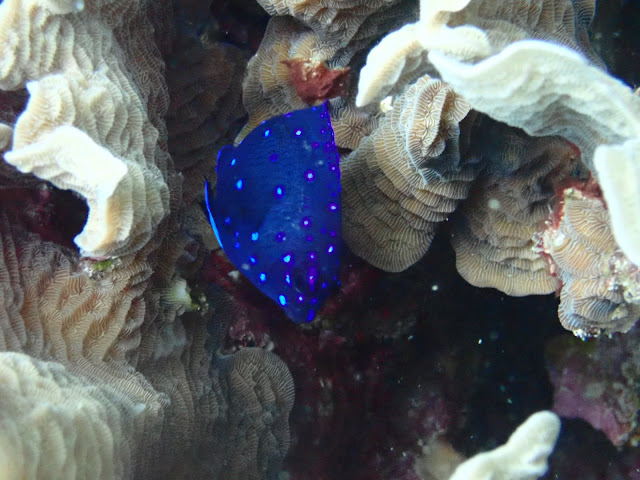
"discofish"


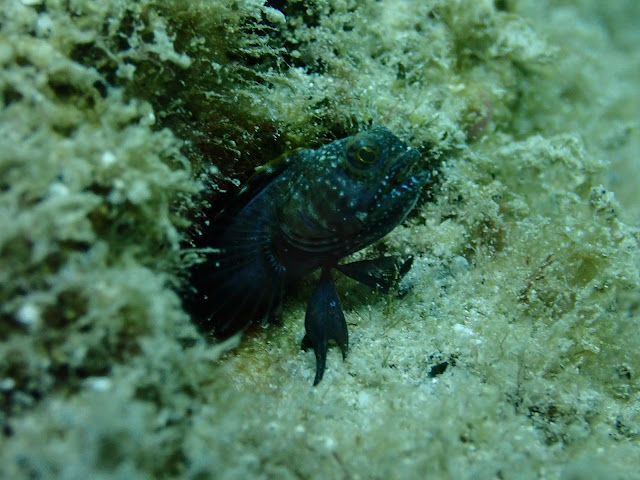
While we didn't find the diving spectacular, we did see plenty of things that were new to uss, such as the "discofish" (juvenile yellowtail damselfish), cryptic teardrop crab, arrow shrimp, trunkfish and more. The absolute best experience though was the night dive we did. At the end of the hour-long dive, where we had spotted a giant lobster, octopus, squid, pygmy squid, shrimps and more, we placed ourselves on the sandy ocean floor and turned off our torches. After a few seconds, small things started to light up in luminescent green - the "string of pearls" that the Honduran Bay Islands are famous for. It was truly magnificent, seeing all of these green "pearls" in the pitch black water, it felt like being in a three-dimensional starry night sky.

cryptic teardrop crab

scorpionfish


pipefish

The only downside of spending a whole week on the island was the lack of local food. While we found a few restaurants and the occasional food stand that we liked, many of the restaurants in the town felt touristy and were quite expensive. One of the evenings we cooked our own dinner in the sparsely equipped kitchen, which was quite nice. We did enjoy having baleadas, the national dish of Honduras, at least once per day. A big tortilla, usually filled with bean paste, cheese and eggs, and folded, could be served for any meal of the day. On the island, they were huge and well filled, compared to the ones on the mainland (which I think are the more traditional version) where we often had to eat three or four to feel full.

a baleada for breakfast

View from our terrace

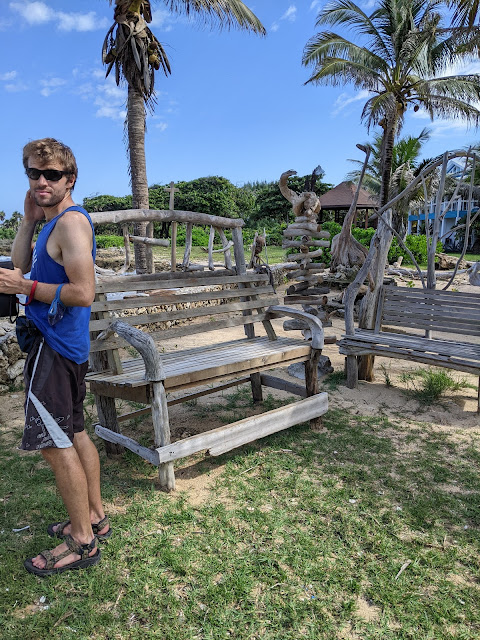
exploring the island

A very good craft beer we enjoyed on Utila


söndag, februari 13

Januari 2022 - Guatemala - Flores, San Pedro La Laguna

 At this point we have been travelling for a month and a half, and we feel like we are really getting into the travel mode. I feel like I'm a bit behind on writing these posts as I am enjoying doing nothing or reading books more than taking the time to write - this truly is a time to relax and enjoy the moment! And so, that's why this first part of Guatemala is getting written as we are about to leave El Salvador. Here are some overall impressions of Guatemala:

  • A colorful country with a lot of culture
  • The breakfast - desayuno tipico - is filling and tasty: many Guatemalan dishes will be served with frijoles and fried plantains, and the avocado is plentiful and always perfectly ripe. We seriously had avocado or guacamole with a majority of all our meals
  • Guatemala has a very clear backpacker trail, which means beautiful places are often also touristy - although that can mean that it's easy to find people who speak a little English, and that you can get an abundance of vegetables in the vegetarian food options
  • People here are kind and helpful, though taxi drivers (especially in the capital) will try to rip you off
  • The local "chicken buses" are repainted old American school buses which reminded us a little bit of the jeepneys in the Philippines 
Let's start at the start. The border crossing from Mexico was very straight forward, the only complicated part was getting the antigen-test in Palenque, as I mentioned in the last post. Our first stop in Guatemala was Flores - a small island in a big lake. Basically, the island is where all the tourists hang out, and on the other side of the bridge, the town of Santa Elena is where most of the locals live. Flores is also the jumping-off point for going to Tikal, the ancient Maya ruins. Booking this tour was one of the first thing we did. Surprisingly, the difference in cost between going with or without a guide was very small, so we decided to go with for a change. We chose to go early in the morning, although not the "sunrise option" which was more expensive. Probably a good choice as well, as it was a rainy day and no sun to be seen.

Going with a guided tour of course meant we had to adapt to the pace of the guide and the group, but we did enjoy getting that bit of extra information. Overall, the temples of Tikal were impressive - huge, and ancient - in the middle of the rainforest. One of the highlights though were of course the wildlife we spotted near the café where we waited for a bit before starting the walk: some different types of wild turkeys, coatis, and some kind of small capybara!


While in Flores, we also took the opportunity to explore some caves just south of Santa Elena. A much less visited site, but definitely worth a visit - although I would recommend some Spanish skills as our guide did not speak any English at all. We opted for the "long tour" (the short option did not require a guide) which was about 2 hours, and included crawling on our bellies through some small openings and walking through quite a big part of the cave system. Definitely a different experience, but pretty cool I'd say! 

the guide instructed me to pose like this, a classic apparently


Another highlight of Flores was taking a boat the short distance across the lake. There are some places to stay there as well, but few options for restaurants and shops. What they do have however, is a viewpoint where you see the island - a perfect postcard picture. There is also a beach where you can hang for a while, and a bar with cheap drinks and snacks just by the water. Watching the sunset from there was just perfect.


At first we were thinking of heading to Semuc Champey next, known for the beautiful waterfalls, but getting there seemed both difficult and expensive, so in the end we decided to get a night bus to the capital and then head to either Lago Atitlán or Antigua. It was almost down to a coin flip; in the end we decided on Lago Atitlán - more specifically, San Pedro La Laguna. There would be a chicken bus heading there without any transfers, so we planned for that. A few things happened on the way, however.

First, we arrived earlier than expected in Guatemala City - 4.30 AM - and it was still dark, so we decided to take a taxi to the bus stop with the San Pedro bus. Even after bargaining hard, we still had to pay quite a lot for the short drive with a guy who had the "taxi" sign in the trunk rather than on the actual car. I'm not 100% sure he was an actual taxi driver. During the drive he also tried to convince us to let him drive us all the way to San Pedro, which would surely have been incredibly expensive. As we arrived to the bus stop he also tried to convince us that there were no buses running that day, and that we should instead let him take us to a hotel. We throught that sounded odd, it was a Monday after all. In the end we just walked away from the taxi and asked a local guy about the bus to San Pedro. He assured us we were in the right location and told us that he was also going there. Five minutes later, the bus arrived!

All good, we thought... until about two hours later, barely halfway to San Pedro when the traffic suddenly stood completely still. Turned out there was a blockade, not letting any vehicles through. No one seemed to know really what was going on, and for a long time we just waited on the bus. Then the other passengers started to leave, and eventually the local guy from the bus station told us (communicating some in Spanish and some via translation app, as he didn't speak much English) that he was going to walk to the other side of the blockade and try to catch another bus there. We followed. 
After that, we alternated between walking (with our big backpacks), waiting by the side of the road, and spending a couple of minutes on a chicken bus, or on a colectivo (so full that we were hanging out of the door). Eventually however, there were no more buses or colectivos as the road was blocked every few kilometers. We started walking more, and trying to hitchhike. Every now and then, someone would let us ride on the back of their truck until the next roadblock. At one point, around 3 PM, we still had more than 30km left and saw fewer and fewer cars passing - we started to lose hope that we would make it to San Pedro (and the hotel we had booked) that day. But how would we spend the night?
Thankfully, just a few kilometers later the blockades eased up, and we just had to take another colectivo, truck and tuktuk before we arrived in our town at 6.30 PM, about 10 hours after we were supposed to arrive. All in all, we had walked around 17km, and mainly eaten some sugar packed snacks that were sold by the side of the road - all the restaurants and shops were also closed - so we were exhausted, but happy, to finally be in San Pedro. All with the help of this local guy who had been able to guide us and talk to people along the way. I can say for certainty that it would not have been possible without him to help us.

Well in San Pedro, we spent a full week. San Pedro is a small and cute, but touristy, town just by the lake, and from our hotel we had a beautiful view of the lake and the mountains and volcanos nearby. We enrolled in Spanish classes, one of the popular acitivities there. Our classroom was a table, a whiteboard and some chairs just by the lake, and our teacher was a local woman who lived nearby. For the next five days, we spent four hours every afternoon improving our Spanish grammar and vocabulary. In the mornings, we would go kayaking to a pretty beach, hike up to the viepoint of Rostro Maya, or just relax. We were hoping to hike the volcanos as well, but most of the travel aggencies were currently not organizing any tours there due to risk of robbery at the summit. While a much shorter hike and lower summit, Rostro Maya still offered a nice experience and incredibly beautiful views from the top. 


Beautiful views from Rostro Maya, with San Pedro town & volcano in the background

Local fisherman / view from our kayaks

Our "classroom"

sunrise over a tiny volcano

We also visited the nearby village San Juan, which was very cute and colorful with plenty of murals, a main street that was just a long market, and plenty of decorations around. On our last day, we took a day trip to Chichicastenango, which hosts one of the largest markets in Central America two times per week. We were hoping to find some nice souvenirs there, but while it was interesting to see, the busy, narrow streets offered either mass produced items for tourists, or fabrics and clothes for the locals. There were some beatiful pieces of fabrics, but they turned out to be table runners (and not scarves, as I was hoping for) so we skipped that and instead bought a pretty painting i San Juan. After a week by the lake we felt relaxed and refreshed, and ready for new adventures in Antigua.

Colorful San Juan La Laguna


Chichicastenango market

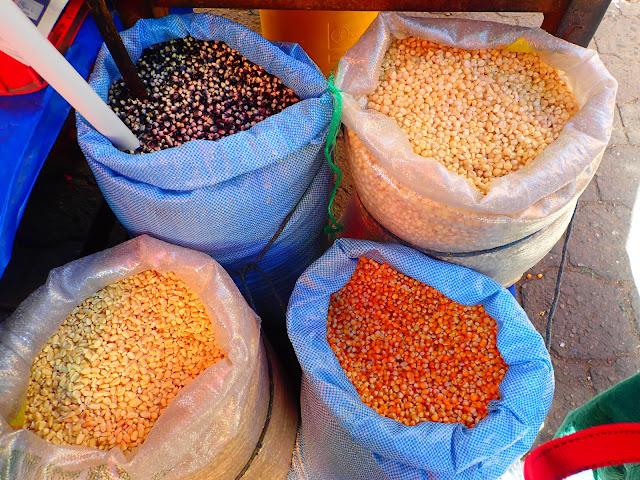
corn!


måndag, augusti 7

Juli 2017 - Sabah, Borneo - Del III

*English summary below*
Så var det dags för tredje och näst sista inlägget om Borneo. Japp, det blir ett till! Berget får sin egen sida. Har delat upp det ganska mycket, både för att det inte ska bli så mycket text (jag har hellre fler bilder) och för att jag själv inte ska behöva skriva allt på en gång.

Så, efter att vi hade övernattat i Sandakan skulle vi tidigt på morgonen ta oss ut till långdistans-busstationen, som låg en bit utanför stan. Vid frukosten träffade vi en dansk tjej som också skulle dit, så vi delade på en taxi (grab) och kom dit billigt och hyfsat snabbt. Vi hoppade på bussen norrut till Kudat, vilket tog lite mer än åtta timmar totalt, med bara ett kortare stopp för lunch. Som tur var tog det inte lång tid innan vi blev upplockade på busstationen. Även denna gång hade vi arrangerat boende i förväg, vilket nästan var ett måste om man skulle en bit utanför stan och inte ville betala dyra pengar för privattaxi. Vi hade lyckats hitta ett väldigt trevligt och lite annorlunda boende. Det var en lokal man som ägde det, och som kom och plockade upp oss i Kudat för att köra oss till den lilla byn Tajau Laut. Det fanns bara två rum, en sovsal och ett dubbelrum, och det var ganska mycket som ett homestay - ägaren bodde med sin familj/släkt i ett hus intill, och de lagade all mat till oss och anordnade utflykter.

Utsikt från verandan på vårt boende
Sett från stranden
 Överlag hade vi en fantastisk tid här. Eftersom det var en så liten by fanns det i princip inga andra turister - med undantag för en dansk familj som kom promenerande på stranden från ett resort några kilometer längre ner. Men det kändes verkligen som att vi fick en genuin upplevelse. Vårt homestay/guesthouse var ganska nyöppnat och inte så lätt att hitta online (Tajau Laut Guesthouse), och vi misstänkte att vi kanske var de första utländska (eller åtminstone första västerländska) gästerna. Ägaren var otroligt snäll och vänlig, och satt gärna och pratade om dykning eller allt möjligt. En kväll fick vi till middag färskfångade krabbor från floden en bit bort (som var fantastiskt goda) och en annan dag fick vi kokosnötter och mango till våran lunch. En annan dag fick vi smaka dolkdjur (tror jag att de heter?), ett slags havslevande djur som ser ut som om de funnits sedan urtiden. Vi har sett dem en gång tidigare, på en marknad i Thailand. Tydligen var det en delikatess här, och man åt både kött och ägg (de smakade mest hav). En morgon körde ägaren, hans bror, och broderns son oss upp till Tip of Borneo, vilket är Borneos nordligaste punkt. Inget speciellt som så, men en vacker plats med mycket vind och hav. Vi promenerade längs en jättelång strand där några var ute och surfade, och hann komma tillbaka till boendet lagom till att ett stort regnoväder drog in.

Landmärke
På nordligaste stranden
De övriga dagarna spenderade vi med att sitta och läsa eller att promenera längs den långa stranden, ofta i sällskap av några hundar som följde med, och passade på att ta bilder, bada och kolla på de häftiga stenformationerna. Strandsträckan närmast vårt boende var som väntat väldigt full av skräp, men när vi gick längre norrut fanns det väldigt fina områden.


Som sagt trivdes vi väldigt bra där, men till slut kände vi att det var dags att åka vidare. Vi blev skjutsade in till Kudat igen, där vi gick runt och kollade (inget särskilt spännande) tills det var dags att ta bussen tillbaka till Kota Kinabalu. På bussen hade de dragit på luftkonditioneringen ordentligt, till kalla knappt 20 grader. Med hjälp av boendet i KK gjorde vi lite efterforskningar om var vi möjligtvis skulle kunna se Rafflesia-blommor (världens största blomma) och så satt vi strax på bussen till Ranau, där vi bytte till privattaxi för att komma till Poring. Poring är mest känd för sina hotsprings, som ligger i en del av Kinabalu-nationalparken. Själva byn var mycket mindre och mycket mer öde än vad vi hade hoppats på, och en natt här var mer än nog. Första dagen gick vi på eftermiddagen för att se rafflesian. Det var två stycken som var i blom, så vi hade tur - det tar över ett år för en knopp att slå ut, och sedan blommar de bara i ungefär fem dagar. För att få se och ta kort på dem fick vi betala 30RM/person i "inträde" till någons trädgård, där de råkade växa. Vi fick också en "guide" (tonårssonen i familjen) som visade oss vägen dit (ca 100 meter). Kanske lite mycket, men det var roligt att få se dem (även om vi hade trott att de skull vara ännu större).

Rafflesia
När vi satt i Poring och funderade över hur vi möjligen skulle kunna fördriva tiden framöver fick vi nys om ett ställe som hette Lupa Masa - djungelcamping. Vi gjorde lite research och bestämde oss för att prova. Dagen därpå gick vi på morgonen till Kinabalu-parken (15RM/person). Där inledde vi med ett bad. De hade installerat massor med kar i olika storlekar, som alla hade två kranar: en med vatten från den varma källan (väldigt varmt) och en med bergsvatten (ganska kallt). Så fick man blanda till behaglig temperatur! Och efteråt kunde man ta sig ett dopp i en pool med enbart svalt bergsvatten. Sedan gick vi vidare för att se parkens andra attraktioner - en fjärilsfarm och en hängbro uppe bland trätoppar (dessa fick vi betala extra för).Efter lunch var det dags att ta oss till Lupa Masa.

Uppe bland trädtopparna
En av få fjärilar som satt stilla länge nog för att kunna bli fotad :)
Vi packade om våra väskor, lämnade de stora i Poring och mötte vår guide samt ett brittiskt par. Vägen till Lupa Masa var nämligen en tvåkilometers promenad genom djungeln. Väl framme kunde vi vila, sitta och läsa, och prata med de andra gästerna. Vårt "boende" var ett tält nere vid floden, där det fanns madrass och filt men ingen kudde (det var inne i en trästruktur, så vi var en bit ovanför marken och hade tak över huvudet). Här var lugnt, tyst och skönt. Vi promenerade runt i djungeln, till ett vattenfall för att bada, och längs med floden (fast vi fick se upp för blodiglar som där fanns en del). Där fanns också två små kattungar, varav en var väldigt kelig och gärna lade sig för att sova i mitt knä :) Det enda nackdelen med att bo här var att det var väldigt lång tid mellan lunchen (klockan 12) och middagen (klockan 20). Men god mat och gott sällskap! Här stannade vi i två nätter, sedan var det dags att åka tillbaka till Kota Kinabalu och förbereda oss för berget.

Vårt boende i Lupa Masa
Fint och härligt vattenfall!
Promenad längs floden
English summary
From Sandakan we took a long bus (8h) North to Kudat, where we were picked up by the owner of the guest house/homestay we would be staying at. It was situated in a small village called Tajau Laut, and there were basically no other tourists. The owner lived in one building with his family/relatives, while we had the other building to ourselves. Though it was quite recently opened, we suspected that we might be the first international guests staying there. The owner was very kind, talking about all kinds of things and preparing all meals for us. One evening we even got fresh crabs caught in the nearby river, and another night we got to try something that I think is called horseshoe crab (although it looks more like a really ancient sea creature). We also did a short trip up to the Tip of Borneo (the most Northern tip of the island) which was very pretty. Otherwise we spent our days reading, swimming and walking along the long and pretty beach. We really liked it here!

After a few days, it was again time to move on. We were driven back to Kudat where we took the bus to Kota Kinabalu. We only stayed one night there, and with some help from the guesthouse we managed to find our next destination. So the next day, we got on the bus to Ranau, where we had to change to a taxi to go to Poring. Poring is mostly known for its hotsprings, which are situated in the Kinabalu national park. But the first thing we did was to go see the Rafflesia-flowers (the largest kind of flower in the world). They take over a year to bloom, and then only last for about five days, so we were lucky to see two of them blooming. Although they were on someone's property, so they charged quite a bit for the "entrance fee". The next day we went into the park, and started off with a swim. They had created several "bathtubs" that each had two taps - one with hot water coming from the hotspring, and one with cold water coming from the mountain. You could also go for a refreshing swim in the pools with only mountain water. We also went to see the other attractions - a butterfly farm and a treetop hanging bridge.

The day before we had found out about a cool place nearby, and since we had some days to spend before the mountain, we decided to check it out. So in the afternoon, after the park, we repacked our bags, left our big backpacks in Poring, and met up with a guide and a British couple to go to the jungle camp Lupa Masa - a 2km walk from Poring through the jungle. At Lupa Masa, in the middle of the jungle, all was quiet and tranquil. Our accomodation was a tent by the river. We would spend the time going for a walk in the jungle, reading, walking to the waterfall for a swim, or walking along the river (but keeping an eye out for leeches). There were also two kittens there, one of which liked to cuddle and sleep in my lap :) The only downside was that it was a full 8 hours between lunch and dinner (12-8pm)! But we really liked it here. We stayed for two nights, and then it was time to go back to Kota Kinabalu again to prepare for the mountain.

fredag, januari 23

Dag 72, När saker inte går som man tänkt sig

Man tycker att livet är enkelt när man reser i Sydostasien. Att det är enkelt att resa, att det är bekvämt att flyga. Att det är extra smidigt att flyga när man kan checka in online innan man kommer till flygplatsen. Tills Vietnam ändrar sina regler för visum utan förvarning, och vi är en minut från att bli strandsatta på Terminal 3 i Manila innan de benådar oss.

Reglerna som gällt tidigare är att man som svensk får 15 dagars visa till Vietnam gratis, utan vidare. Nytt för 2015 är att detta endast gäller om det är minst 30 dagar sedan senaste utresedatum från Vietnam; detta fanns dock ingen information om förrän det trädde i kraft, och var omöjligt för oss att veta när vi bokade våra flygbiljetter till och från Filippinerna, i mitten av december. Ingen information ges heller från flygbolaget eller när vi lämnar Vietnam. Således står vi vid bag-drop på flygplatsen men får inte gå vidare eftersom vi bara har 29 dagar sedan utresedatum. Vi bönar och ber om att få komma på planet och vänta de sista timmarna på Hanois flygplats. De säger att vi måste fixa visa via internet, och vi betalar ett expressvisa för 132 dollar bara för att ett par minuter senare få ett mail som säger att de inte jobbar kvällstid och att vi inte kan få visat förrän om några dagar. Vi begär pengarna tillbaka och får tjata på flygpersonalen med tårar i ögonen tills de går med på att skicka ett mail och fråga om de kan göra undantag för oss. Vi får vänta vid disken i två timmar på svar och hinner ge upp hoppet helt, tills de en minut innan incheckningen stänger har fått ett svar att det är okej. Vi får komma in i landet. Vi hinner med vårt flyg. Vi för våra boarding pass, lämnar in väskorna och springer genom säkerhetskontrollerna bort till gaten, till vårt flyg som blir nästan tre timmar försenat. Vi landar mitt i natten, lättade, utmattade och hamnar i vänthallen där vi sover tills det är morgon. Nu har vi kommit in till Hanoi, hittat ett fint boende och trivs hur bra som helst. Är förtjusta i smågatorna som är fyllda med streetfood, souvenirer, fruktstånd och kaféer med vietnamesiskt kaffe (som smakar precis som mörk choklad!). Är så glada över att inte längre vara i Manila.


Med det sagt tänkte jag nämna kort om att ta sig över gränsen till ett annat land, något som alltid är tidskrävande, krångligt och ibland ganska dyrt. Tar man sig via landgränsen åker man oftast buss eller minibuss, många timmar på dåliga vägar. Ett billigare, men lite krångligare, alternativ är att bara köpa bussbiljett till gränsen, och ta sig vidare därifrån. Köper man paketresa så väntar det en annan buss på andra sidan gränsen, men det kostar mer och man råkar ofta ut för större eller mindre "bedrägerier". När vi skulle in i Kambodja från Thailand hamnade vi på den enda gränsen där man var tvungen att betala visumet med baht, vilket innebar att vi fick betala mycket mer än vad det egentligen skulle kostat. Vid gränsen till Vietnam var vi tvungen att betala 1 dollar per person för en "hälsokontroll" och fick vänta i tre timmar på bussen på andra sidan gränsen. Man ska vara försiktig och misstänksam, för att inte hamna i en dålig deal. För en del gränser behöver man också betala extra om man inte har med sig personfoto, så det kan vara bra att fixa från en fotoautomat i förväg. I lonely planet och på internet kan man också läsa om vilka gränsorter som är välanvända och mer säkra.
Att flyga in i ett land är enklare och smidigare, och risken att luras på pengar är betydligt mindre eftersom det är mer standardiserat.


Slutligen kan nämnas att vi nu har avverkat en tredjedel av vår resa. Det börjar bli mer påtagligt att man saknar vissa saker hemifrån. En del dagar längtar man mer efter den trygga vardagen eller småsaker man inte har här. När vi reser mycket längtar man efter att vara bofast och att sova i sin egen säng. När maten inte är så spännande längtar man efter sin favoritmat hemma. Långa rastlösa dagar längtar jag efter musik, efter att följa mina serier. Dagar med mycket stillasittande saknar vi att träna. Och när vi inte träffar några andra resande saknar vi våra vänner hemifrån lite extra mycket. Ibland önskar man att man slapp gå runt i samma kläder varje dag. Men på de bra dagarna är vi glada att vi är iväg, när vi ser vackra platser och får nya upplevelser glömmer vi alla småsaker och stormtrivs, njuter av platserna, upplevelserna och av att ha varandra. Dagarna flyter på och tiden går fort, och vi påminns om att njuta av tillvaron; innan vi vet ordet av är vi tillbaka i vardagen och kommer förmodligen att drömma oss tillbaka till de månader då vi såg oss om i världen.